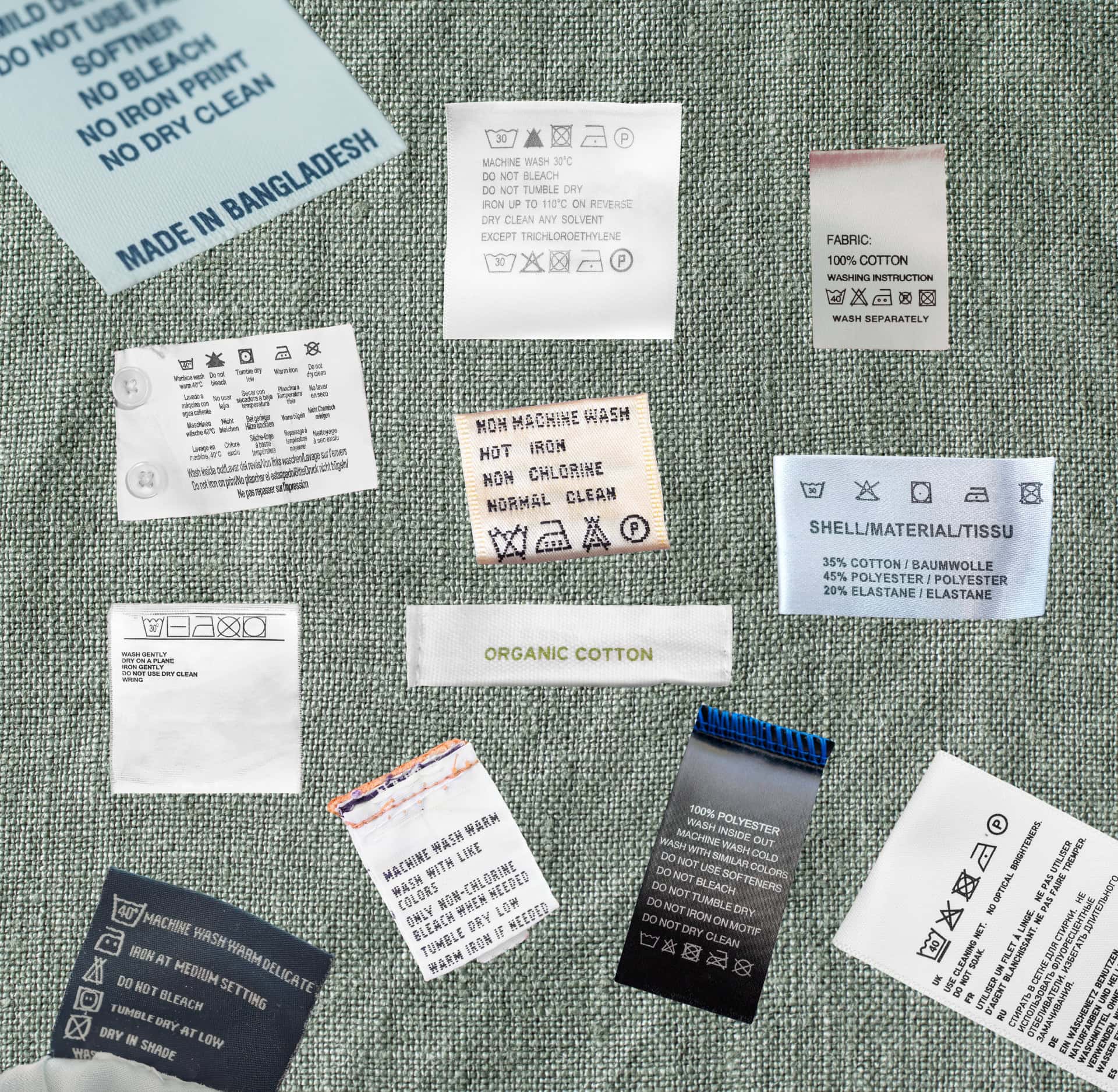
In our view, fiber content material is arguably crucial line in your tag. It determines how you can wash your garment, whether or not it sheds microplastics, whether or not it should biodegrade on the finish of life, and what its environmental footprint seems to be like.
It’s additionally the very first thing to examine once you’re purchasing, whether or not you’re searching for brand spanking new garments or sorting by way of a thrift retailer rack. In the event you’re purchasing on-line, you possibly can normally discover this data within the “supplies” (or equal) part on the product web page.
Pure Fibers On Your Label
In case your tag says cotton, natural cotton, linen, hemp, wool, or silk, you’re taking a look at a pure fiber. These are derived from crops or animals with comparatively minimal chemical processing.
Pure fibers are typically biodegradable, don’t shed plastic microfibers when washed, and (relying on how they’re farmed) can have decrease environmental footprints than synthetics.
Natural cotton makes use of up to 91% less water than typical cotton and eliminates artificial pesticides. Linen and hemp are significantly low-impact crops. Ethical wool may be sustainable when sourced from licensed farms.
Pure fibers typically do nicely with chilly or heat washing, reply nicely to air drying, and might deal with most light detergents. They’re additionally simpler to recycle and compost at finish of life.
Nonetheless, it’s essential to know that that is solely the case if the fibers are usually not blended with synthetics. For instance, a 60% natural cotton cotton and 40% polyester T-shirt would nonetheless shed microplastics and never be compostable or biodegradable.
Semi-Artificial Fibers On Your Label
Tags itemizing viscose, rayon, modal, lyocell, or bamboo point out semi-synthetic fibers. These begin as plant-based cellulose (normally wooden pulp) however endure chemical processing to develop into cloth.
The sustainability vary right here is broad. Conventional viscose/rayon makes use of harsh chemical compounds like carbon disulfide. Lyocell (together with branded TENCEL) makes use of a closed-loop course of that recycles 99% of its solvents, making it considerably cleaner and modal falls someplace in between.
With regards to bamboo, the FTC requires that textiles created from bamboo by way of a chemical course of be labeled as “rayon created from bamboo” relatively than merely “bamboo,” as a result of the manufacturing transforms the plant so fully. In the event you see a tag saying simply “bamboo cloth,” be skeptical. The FTC has fined major retailers hundreds of thousands for mislabeling rayon merchandise as bamboo. Our bamboo fabric guide breaks this down in full.
Artificial Fibers On Your Label
Polyester, nylon, acrylic, spandex/elastane, and polypropylene are petroleum-derived synthetic fabrics. They dominate the worldwide textile market (polyester alone accounts for over half of all fiber production).
This can be a main sustainability difficulty as a result of each time you wash artificial clothes, it releases microplastic fibers into waterways. A University of Plymouth study printed in Marine Air pollution Bulletin discovered {that a} single 6kg wash load of acrylic cloth may launch over 700,000 microfibers. These are too small for many wastewater remedy crops to catch, and so they find yourself in rivers, oceans, and finally, the meals chain.
A tag that exhibits any artificial content material (even small quantities) means the garment received’t absolutely biodegrade and can shed some microfibers with each wash.
In the event you personal artificial or blended clothes (and most of us do), wash them in a microfiber-catching laundry bag or set up a washing machine filter. It received’t eradicate the issue, however it considerably reduces fiber launch.
Studying fiber content material when thrifting
One in all our prime thrift shopping tips is to all the time examine the fiber content material tag earlier than shopping for. It helps you assess high quality, anticipate care wants, and make extra sustainable decisions. 100% pure fibers are typically a greater long-term wager. Excessive artificial content material in a secondhand merchandise means it’s already shed microfibers by way of earlier washes and can proceed to take action.
And in case you’re searching classic clothes, the vintage label may also help you date the garment and determine its producer.
Trending Merchandise