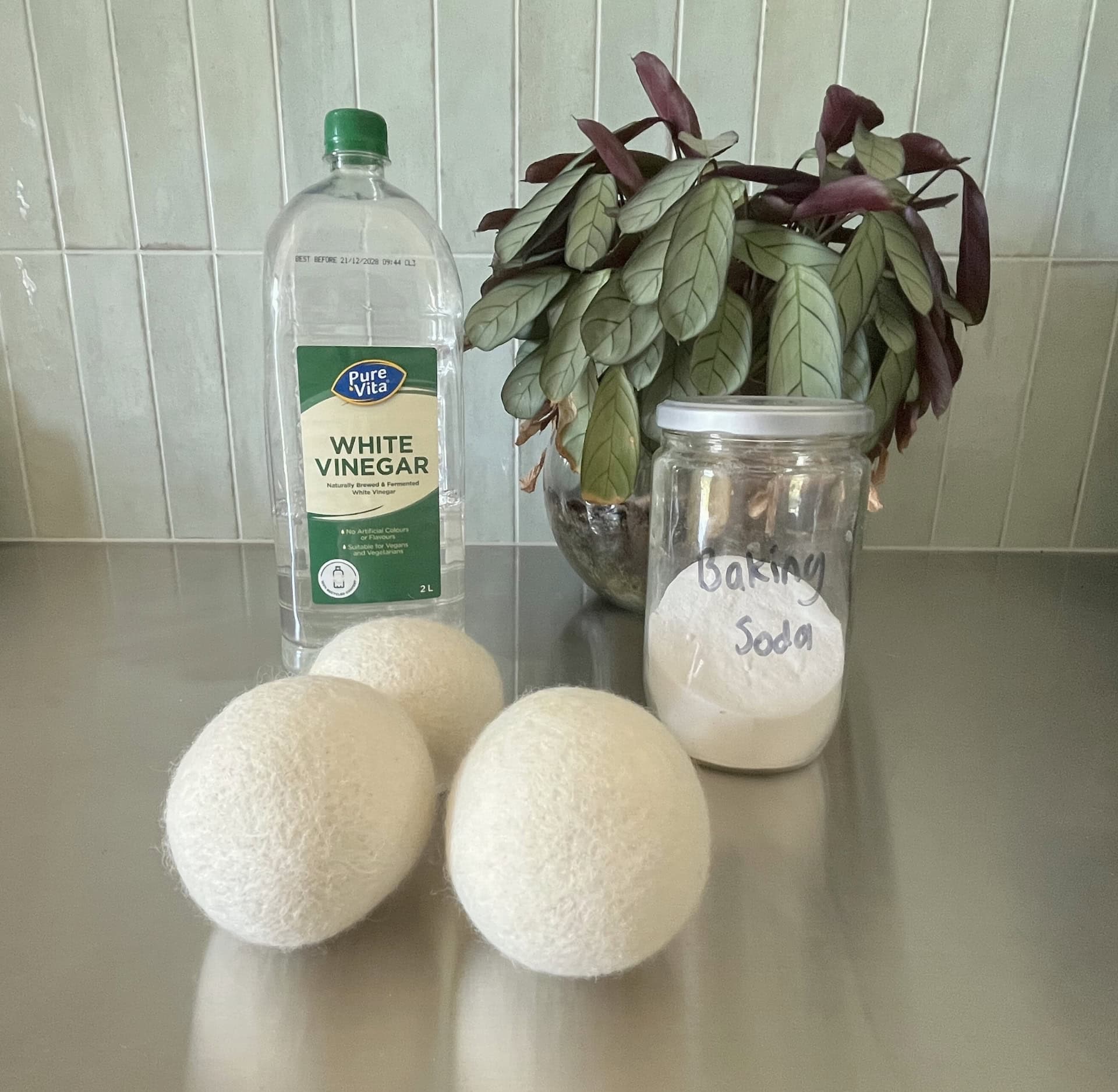
Do pure material softener options really work? Sure. In our expertise, wool dryer balls mixed with vinegar within the wash cycle delivers outcomes which are corresponding to (and in some methods higher than) standard material softener. Your garments will really feel mushy, scent recent when you add important oils to your dryer balls, and received’t have static. The principle distinction is you received’t have that slippery chemical coating, which is definitely a very good factor because it means your towels will likely be extra absorbent and your activewear will really wick moisture correctly.
Do aluminum foil balls really work as a cloth softener different? This can be a fashionable web hack, and we wish to be upfront: the proof is combined. In concept, aluminum acts as a conductor that absorbs and discharges the static electrical energy that builds up as garments tumble within the dryer. Some laundry specialists swear by it. Nonetheless, when Good Housekeeping’s product testing crew ran equivalent hundreds with and with out aluminum foil balls, they discovered the hundreds had equal quantities of static (you possibly can learn The Kitchn’s write-up on that test). Different testers have reported modest enhancements. The foil balls may also degrade with use and doubtlessly depart small aluminum fragments on garments. We haven’t examined this ourselves, so we will’t vouch for it. If static is your foremost concern, we’d level you towards wool dryer balls as a extra dependable (and higher examined) resolution.
Can important oils substitute material softener? Not fairly. Important oils add pure perfume and a few (like tea tree and eucalyptus) have antibacterial properties that assist with odor, however they don’t really soften material. The softening in most “important oil material softener” recipes comes from the vinegar or baking soda they’re combined with, not the oils themselves. That stated, important oils are a unbelievable add-on to different strategies on this information: a number of drops on wool dryer balls or mixed with vinegar within the rinse cycle. They’re a a lot more healthy option to get that “recent laundry” scent than artificial fragrances. Simply be aware that important oils are flammable, so use only some drops and keep away from excessive dryer warmth. Some coloured oils (like tangerine, patchouli, and blue tansy) may also stain mild materials, so keep on with clear oils like lavender, lemon, and eucalyptus.
Can I take advantage of hair conditioner as material softener? It is going to soften your garments, sure, however we selected to not embody it as a advisable different as a result of standard hair conditioner accommodates cationic surfactants, which are literally the identical class of chemical compounds utilized in standard material softeners. So whilst you’re making a DIY model, you’re basically recreating a chemical material softener with a special product. It could actually additionally depart residue on fibers (decreasing towel absorbency similar to common softener) and will comprise silicones that construct up on material over time. In the event you’re switching away from material softener for well being or environmental causes, conditioner doesn’t absolutely align with that objective. Vinegar and baking soda are cleaner options that soften by means of completely different (and extra genuinely pure) mechanisms.
Can I take advantage of tennis balls as a cloth softener? Tennis balls work in a pinch for fluffing, however as a result of they’re product of artificial supplies, they received’t take in water (canceling out the energy-saving advantages) and can shed microplastics. So we don’t suggest tennis balls for laundry. Follow wool, hemp, or bamboo dryer balls when you can. Learn our information to washing machine filters when you’re all for microfiber prevention.
Is vinegar secure for my washer? Completely. In actual fact, vinegar helps maintain your washer clear by stopping mildew and mineral buildup. Some machine producers warning in opposition to extreme vinegar use on rubber seals over very lengthy intervals, however utilizing 1/2 cup within the rinse cycle is extensively thought of secure and helpful for each front-load and top-load machines.
Can I take advantage of vinegar and baking soda collectively in laundry? Not in the identical cycle on the identical time. Vinegar is acidic and baking soda is alkaline, so when mixed straight they neutralize one another (and poo). Use baking soda within the wash cycle and vinegar within the rinse cycle, or use our DIY material softener recipe the place they’re pre-mixed and stabilized to be used.
What’s the finest pure material softener that smells good? For the best-smelling pure laundry, we suggest including a number of drops of lavender or eucalyptus important oil to wool dryer balls earlier than every dryer cycle. This provides a delicate, pure perfume with out artificial chemical compounds. It’s also possible to add a number of drops of important oil to your vinegar rinse for scent within the wash cycle.
What can I take advantage of as an alternative of material softener for static? Wool dryer balls are the simplest pure anti-static resolution for the dryer. The largest tip for decreasing static naturally is to keep away from over-drying your garments. Eradicating them whereas nonetheless barely damp eliminates most static. In the event you’re in a pinch, some folks use aluminum foil balls within the dryer (see above), although outcomes range.
Is there a pure material softener for the dryer? Wool dryer balls are the perfect pure material softener for the dryer. They bodily separate and fluff materials as they tumble, softening garments and decreasing drying time. Add a few drops of important oils for scent.
Can I take advantage of these pure options in a front-load washer? Sure! Vinegar, baking soda, and the DIY recipes all work in front-load washers. Add vinegar to the material softener dispenser. Add baking soda on to the drum earlier than loading garments. For scent, add important oils to wool dryer balls somewhat than on to the wash cycle (since you possibly can’t open a front-loader mid-cycle).
Are these options secure for a septic system? Sure. Vinegar, baking soda, and important oils are all septic-safe and much gentler on septic programs than standard material softeners, whose chemical residues can disrupt the bacterial steadiness in septic tanks.
Why do my garments really feel stiff with out material softener? Stiff laundry is often brought on by onerous water mineral deposits, detergent residue, or over-drying. Including vinegar to the rinse cycle addresses the primary two causes, whereas eradicating garments from the dryer whereas barely damp handles the third. When you break the material softener behavior, you’ll seemingly discover your garments really feel naturally snug with none components.
How do I make the swap from material softener to pure options? Begin by merely stopping material softener use and including 1/2 cup of white vinegar to your rinse cycle. Chances are you’ll discover your garments really feel barely completely different for the primary few washes because the chemical coating left by earlier material softener use washes away. After 3-4 washes, your garments will really really feel cleaner and extra pure. From there, experiment with dryer balls, baking soda, or DIY recipes to search out the mix that works finest for you.
Trending Merchandise