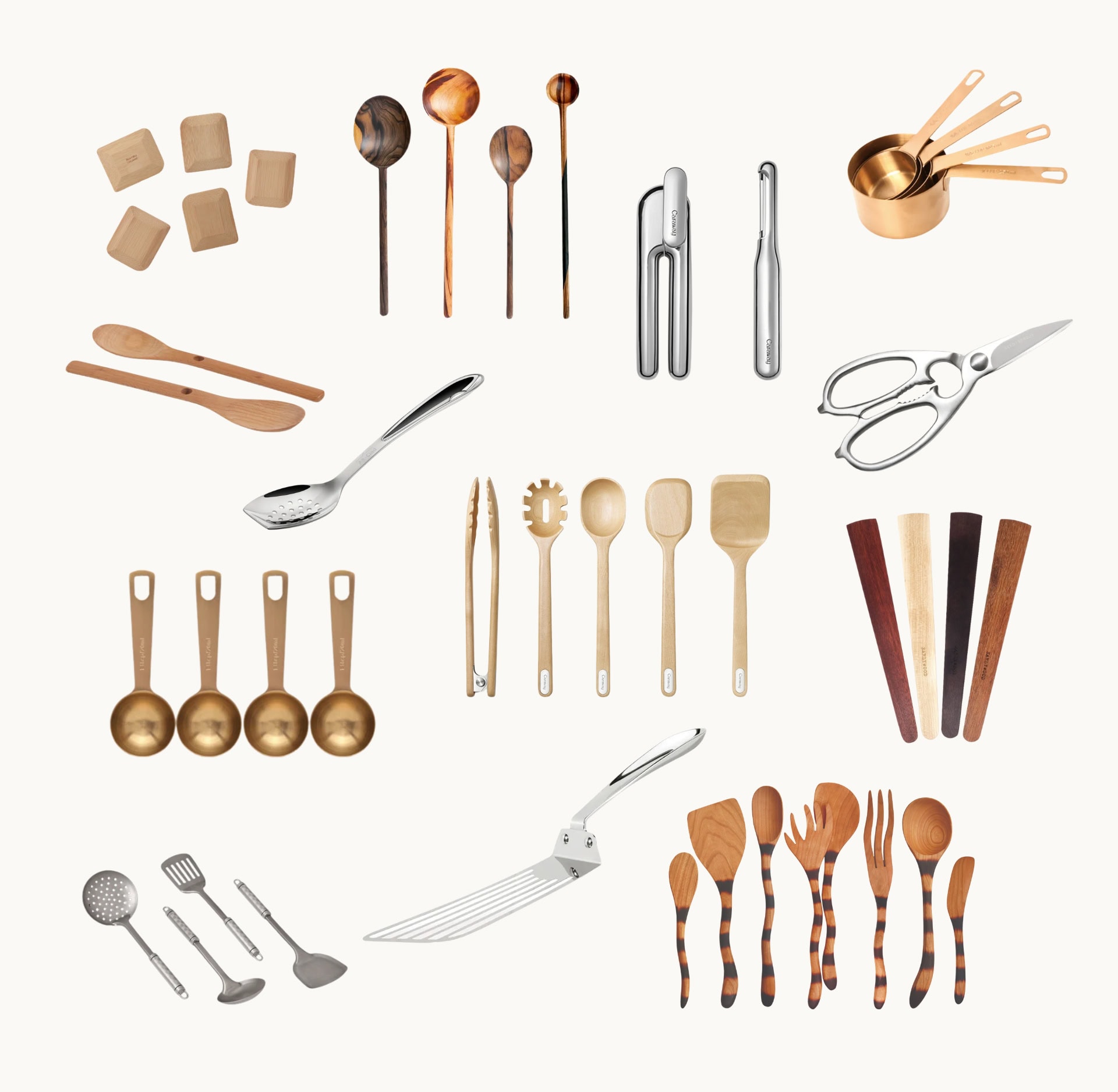
Not all “non-toxic” utensils are created equal. Right here’s what to learn about every materials.
Stainless Metal
The workhorse of non-toxic kitchens. Meals-grade stainless-steel (search for 18/10 or 18/8) is non-reactive, non-porous, and inherently free from chemical coatings. It’s additionally absolutely recyclable, dishwasher protected, and basically maintenance-free.
It additionally lasts eternally. We’ve discovered a number of stainless-steel utensils in thrift shops that seem like they’re in close to excellent situation (and so they’ve in all probability had a number of lives already).
The one actual downsides: stainless-steel can scratch non-stick and ceramic cookware, and handles can get scorching if left in a pan. In case you cook dinner with ceramic or enamel-coated cookware, pair it with wood or bamboo utensils as an alternative to guard the floor.
For these with nickel sensitivities, commonplace 18/10 stainless-steel does comprise nickel. Titanium is an effective various in that case.
Wooden
Picket utensils have been kitchen staples since lengthy earlier than plastic existed. When created from untreated, food-safe wooden and completed with pure oils or beeswax, they’re utterly non-toxic.
Search for utensils completed with food-grade mineral oil, beeswax, or plant-based oils. Keep away from something with an “undisclosed lacquer” or thriller coating, as these can comprise chemical compounds you don’t need close to your meals. FSC certification ensures the wooden was responsibly sourced.
Standard decisions embody cherry, maple, beech, olive, acacia, and numerous hardwoods. Every has barely totally different traits, however all share the benefit of being mild on cookware, naturally heat-resistant, and biodegradable at finish of life. They do require hand washing and occasional oiling to take care of.
Bamboo
Technically a grass reasonably than a wooden, bamboo shares most of wooden’s advantages: it’s naturally non-toxic, heat-resistant, mild on cookware, and biodegradable. It’s additionally more durable than many hardwoods and grows remarkably quick, making it probably the most sustainable uncooked supplies accessible.
The identical end guidelines apply in that we’d suggest in search of pure oil, food-safe or beeswax finishes reasonably than artificial lacquers. FSC certification issues for bamboo too, as uncertified bamboo farming can displace pure forests and hurt biodiversity. Most bamboo is sourced from Asia, so transportation provides to its carbon footprint.
Titanium
The premium possibility. Pure titanium is totally non-reactive (even with acidic meals), naturally antibacterial, light-weight, and terribly sturdy. It’s additionally free from any coatings, as a result of it merely doesn’t want them.
Titanium is dearer than every other utensil materials, and the provision chain could be more durable to hint. However for many who desire a virtually indestructible, absolutely recyclable, zero-maintenance possibility (or who must keep away from nickel), it’s value contemplating.
Trending Merchandise